Buyer comparison
AI safety monitoring vs ordinary security cameras
A security camera is a recording device. AI safety monitoring is a review workflow that looks for hazardous conditions and turns them into evidence and corrective actions.
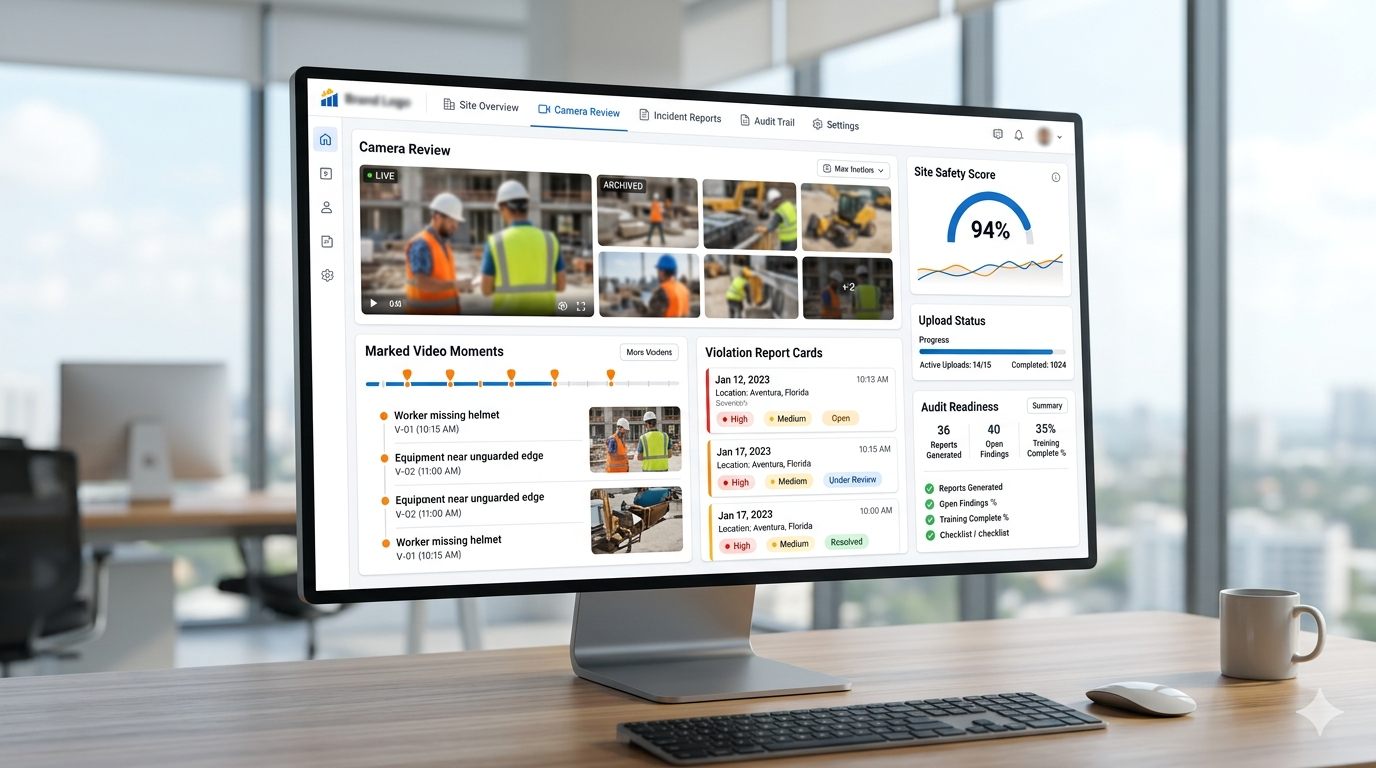
Recording is not protection
Cameras help after an incident only if someone reviews the footage. AI review helps surface the safety moment while correction is still possible.
Safety context matters
The system evaluates PPE, zones, distances, edges, ladders, scaffolds, suspended loads, and worker/equipment relationships instead of only motion or intrusion.
Existing cameras still matter
The product is designed to start from video the contractor already owns, then improve with calibration and site-zone setup.
What this page covers
- Security cameras record
- AI monitoring reviews
- Reports prioritize corrections
- Existing cameras can become safety assets
Frequently asked questions
Short answers for contractors, safety officers, and risk teams evaluating AI video review for compliance support.
Do we need to replace the camera system?
Not necessarily. Start by testing existing footage and identifying the best coverage areas.
Can security vendors provide the same report?
Some provide alerts, but OSHA-oriented evidence, rule mapping, measurements, and correction workflows are a different product layer.
What should we test first?
Test cameras that see equipment routes, lift zones, elevated work, walkways, and high-traffic PPE areas.
Related OSHA Compliance AI pages
AI video review for Florida construction contractors: OSHA compliance reports, PPE and fall-protection monitoring, violation evidence, and penalty exposure estimates.
AI construction safety monitoring for Texas contractors: OSHA-oriented video review, violation detection, evidence clips, daily reports, and corrective-action recommendations.
Turn construction cameras into safety analytics: worker tracking, PPE checks, danger zones, 3D distance estimates, OSHA-oriented reports, and evidence clips.
OSHA-oriented violation detection from jobsite video: PPE, fall protection, struck-by risk, caught-between risk, exclusion zones, ladders, and scaffolds.
AI PPE compliance monitoring for construction: hard hat detection, high-visibility vest checks, fall-risk PPE evidence, and daily safety reports.
AI fall protection monitoring for construction cameras: unprotected edges, fall-risk zones, missing harness/lanyard evidence, scaffolds, and daily OSHA-oriented reports.
AI construction risk monitoring for contractors and insurance teams: OSHA-oriented safety evidence, recurring hazard trends, and daily jobsite risk reports.
Daily OSHA-oriented construction safety reports with top violations, evidence clips, severity, penalty exposure estimates, and corrective-action recommendations.
Daily OSHA-oriented safety reports for general contractors: cross-sub coordination, PPE and fall protection evidence, high-severity risk tracking, and corrective-action follow-up.
Safety evidence and daily OSHA-oriented reporting for subcontractors: PPE, fall-risk work, equipment proximity, and corrective-action recommendations from existing cameras.
Expand your safety consulting impact with OSHA-oriented video evidence: daily findings, marked clips, recurring hazard trends, and corrective-action recommendations.
Construction safety evidence for insurance and risk teams: recurring hazard trends, high-severity exposures, and corrective-action follow-up from ordinary jobsite cameras.